
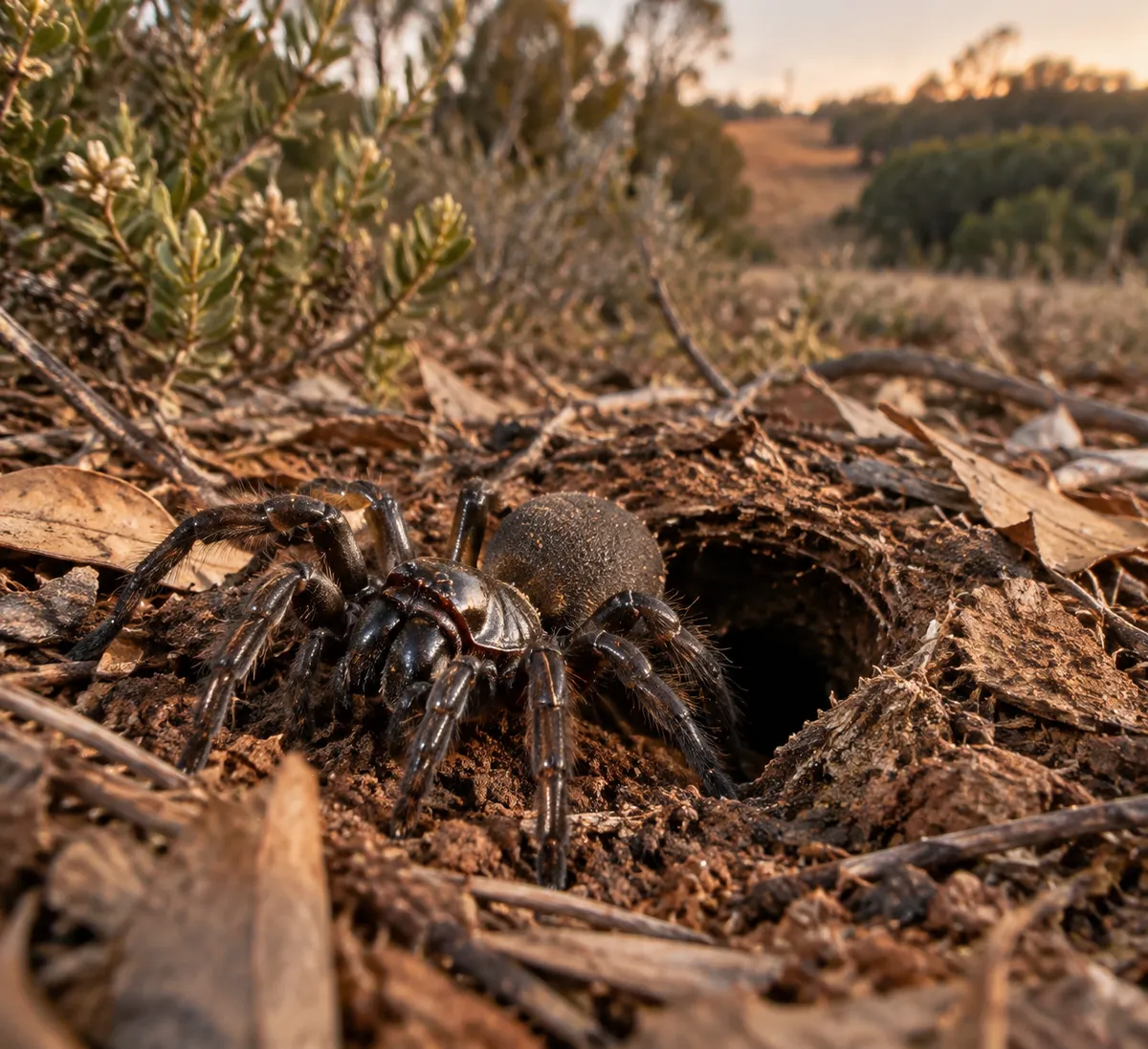
Genetic diversity is one of biology's most basic health measures. When a population gets small and isolated, its gene pool narrows, and that can leave it more fragile. A Ph.D. researcher in Western Australia is studying that problem in an unlikely patient: the endangered trapdoor spider. Here is what his work shows about how scientists assess the health of a species, and why the method matters well beyond spiders.
The work of researcher Jackson Rendall was profiled by Phys. According to that report, he studies how genetics, habitat fragmentation and reproduction affect the survival of WA's endangered trapdoor spiders. His motivation, per the profile, is refreshingly simple: he thinks they are "just really cool."
Why a Spider Can Be a Genetic Case Study
Trapdoor spiders are small and largely immobile. That matters because of how habitat loss works. When land is cleared, populations can end up stranded in separate patches. A species that cannot easily travel has a hard time reconnecting with others.
Per the Phys report, conservationists need better data on genetic diversity before populations decline further. That is the logic of preventive medicine applied to wildlife: measure the risk early, while there is still something to act on.
The same principle underpins human public health. Screening works because it catches trouble before symptoms are obvious. Here, genetic data plays the screening role for a species.
How Researchers Gather the Evidence
According to the profile, the fieldwork rests on three practical tools:
- Burrows. Spiders live in burrows, so finding burrows is how researchers find the animals.
- Leg samples. Genetic material can be collected from a spider's leg, which is the source of the story's quirkier details.
- Population mapping. Plotting where spiders live helps show how populations are spread across fragmented habitat.
Put together, these could guide future conservation strategies, per the report. Samples reveal how related or diverse the animals are, and maps show where they live and how separated they are. Together they let you ask whether a population is healthy or quietly inbreeding.
The report details of the sampling are a reminder that good data often comes from unglamorous, careful work, not high drama.
Reproduction Is Part of the Puzzle
The profile says Rendall also looks at reproduction, which is central to survival for any slow-growing species. Species that grow slowly are hard to save: losses are not quickly replaced, so any decline can take a long time to reverse.
Understanding who breeds, and how often, helps explain whether genetic diversity can recover or keeps shrinking. The report also points to mating footage as part of the research, one of the stranger details of the story.
Why Overlooked Animals Matter
The profile frames these spiders as "uncool" animals that can reveal big lessons about ecosystem resilience. One of the key angles in the coverage is that trapdoor spider burrows support other species, so protecting the spiders can mean protecting more than the spiders.
That is a useful way to think about health in general. Individuals, populations and ecosystems are connected, and a weak link in one can show up in the others.
What You Can Take From It
You do not need to be a field biologist to use the lesson:
- Measure before the crisis. Whether it is a spider population or your own blood pressure, early data gives you more options.
- Diversity is protective. A varied gene pool is generally more resilient, a idea that runs through medical genetics and conservation alike.
- Isolation carries risk. Fragmented habitats are a problem for animals that cannot move, and that is why connection is a recurring conservation goal.
- Small subjects can carry big lessons. Research on a spider can sharpen the tools used to protect other vulnerable species.
The Phys profile does not claim the work is finished. It describes research aimed at guiding future strategies, not a completed rescue plan. That honesty is worth keeping in mind: conservation genetics is a slow, data-hungry process, much like the species it studies.
The Takeaway
Next time you hear about an endangered species nobody finds charming, ask what its DNA could tell us. Then support the researchers, local conservation groups and habitat protections that make collecting that data possible, because you cannot protect a population you have not measured.