
Revolutionary Portable Technology Transforms Interventional Procedures
Researchers at Washington University have developed a breakthrough portable PET scanner that brings real-time molecular imaging directly to hospital bedsides, potentially transforming how clinicians perform interventional procedures like biopsies and tumor ablations.
The innovative system addresses a significant gap in current medical imaging capabilities. While interventional radiology has traditionally relied on anatomical imaging methods such as ultrasound, X-ray, and CT scans, these approaches are less accurate than PET-guided procedures. However, dedicated PET/CT systems have remained out of reach for most hospitals due to their prohibitive costs.
Real-Time Imaging Changes the Game
What sets this new technology apart is its ability to provide real-time visual feedback during procedures. The system employs incremental image reconstruction, enabling clinicians to see results as data is acquired rather than waiting for a complete scan to finish. This immediate feedback capability represents a fundamental shift in how molecular imaging can be integrated into clinical workflows.
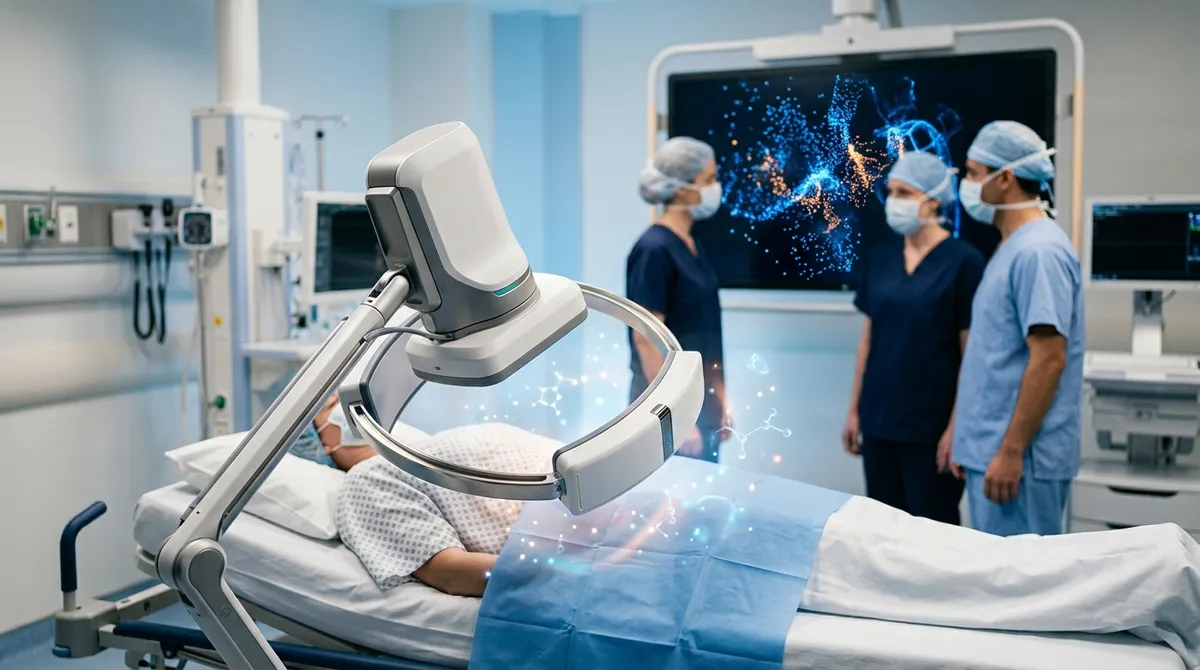
The portable scanner uses a sophisticated robotic arm to position detector panels, allowing for flexible imaging of any organ at the bedside. This versatility means the technology can adapt to various procedural needs without requiring patients to be moved to specialized imaging suites.
Addressing Critical Healthcare Access Issues
According to reports, the development tackles a major clinical and economic challenge in healthcare. The cost-access problem has long prevented many hospitals from offering PET-guided interventional procedures, despite their superior accuracy compared to traditional imaging methods. This portable, cost-effective alternative could democratize access to molecular imaging across diverse hospital settings.
The technology promises particular benefits for procedures that require precise guidance, including biopsies, ablations, and tumor removal operations. By providing real-time molecular imaging at the point of care, clinicians can make more informed decisions during these critical procedures.
Technical Innovation Behind the Breakthrough
The system's technical capabilities represent a significant advancement in medical imaging technology. The robotic positioning system allows for unprecedented flexibility in detector placement, enabling comprehensive imaging of various anatomical regions without the spatial constraints of traditional fixed imaging systems.
The incremental reconstruction technology fundamentally changes the procedural experience for both surgeons and radiologists. Rather than working with static pre-procedure images or waiting for lengthy scan completions, medical teams can now observe real-time changes and adjust their approach accordingly.
Clinical Implementation Timeline
The research team has outlined a clear path toward clinical implementation, with human trials scheduled to launch in 2027. This timeline suggests that the technology has progressed beyond proof-of-concept stages and is approaching real-world testing phases.
The upcoming human trials will be crucial for validating the system's safety and efficacy in actual clinical settings. These studies will also help determine which specific procedures and patient populations benefit most from this point-of-care molecular imaging approach.
Broader Implications for Healthcare
The development represents more than just a technological advancement; it embodies a shift toward making sophisticated medical imaging more accessible and practical for everyday clinical use. By bridging the gap between cutting-edge imaging capabilities and hospital economics, this innovation could significantly expand the availability of precision-guided interventional procedures.
As healthcare systems worldwide grapple with balancing advanced care capabilities with cost constraints, solutions like this portable PET scanner offer a promising model for bringing high-quality imaging technology to more patients and healthcare facilities.
The successful implementation of this technology could pave the way for similar innovations that prioritize both clinical excellence and practical accessibility in medical imaging.